
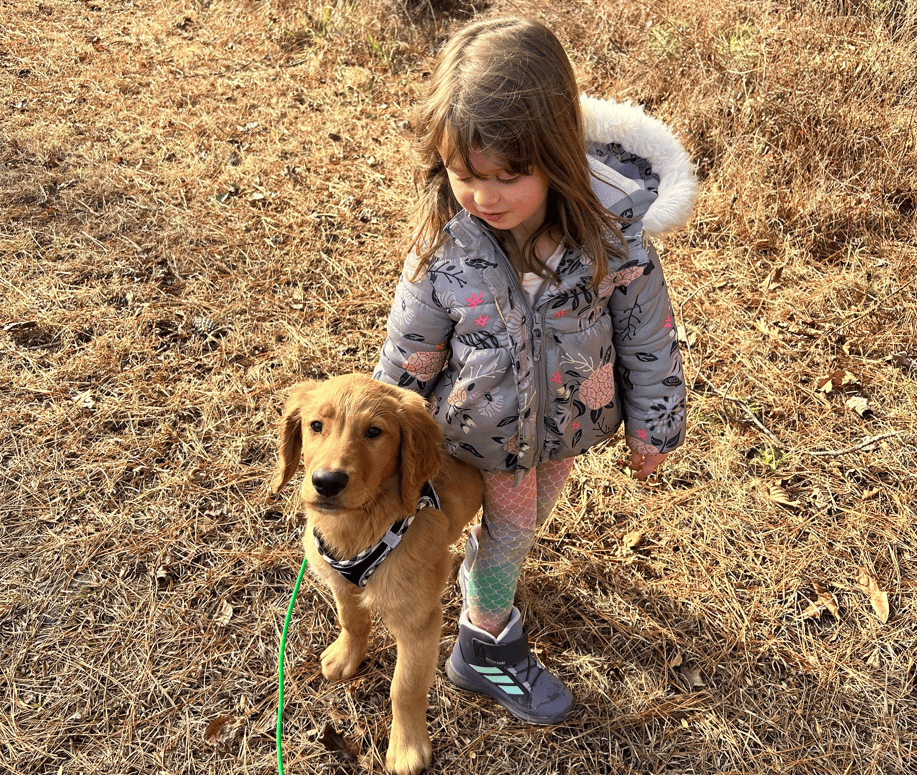
Being a responsible dog owner is important in many contexts, but it is perhaps most important when you have young children in your home who can interact with your dog. Dogs and children share many characteristics – they are often excitable, unpredictable, impulsive, and can be difficult to control.
As a parent myself, I know how vital it is to be vigilant when you have children around your dog. Many people would attribute this vigilance to simply being protective of my kids, but the reality is that the risks are very real for the dog, too. A tense situation or confrontation arising between your child and your dog could create serious long-term behavioral concerns for your pup and potential injury for your child.
Why kids and dogs can be a risky combination
Young children present a unique challenge for dogs. Perhaps the biggest issue is that kids are often fascinated by dogs and feel that they simply must interact with them. Kids often make sudden or unpredictable movements, can make loud or high-pitched noises, and have no real comprehension of personal space. Any of these behaviors can be problematic when they are displayed around your dog. A child who runs around erratically may arouse prey drive in some dogs, while a dog who feels crowded by a kid who is constantly trying to cling to them may react unexpectedly in an effort to create distance.
Guidance for adults
For obvious reasons, we cannot expect dogs and children to be able to regulate their behavior around one another, so the onus is on parents or guardians to take responsibility for the safety of both parties. Here are a few ways that adults can keep interactions safe.
Teach children how to interact safely with dogs
The first step is to teach your child about the do’s and don’ts of interactions with dogs. The age of the child will dictate how quickly they pick up on these instructions, but starting at a very early age will minimize the potential for unwanted situations. Some basic ground rules include:
- No hugging or climbing on the dog
- No crowding or cornering the dog
- Don’t run towards or away from the dog
- Don’t scream around the dog
- Always pet gently and don’t repeatedly pull a hand away
- Don’t interfere with a dog when they are eating, drinking or sleeping
- Always ask permission before petting a dog
The easiest way to frame this – particularly for younger children – is that a child should always look to a grown-up for guidance before interacting with the dog. Emphasize to your child that this is to protect both them and the dog.
Understanding dog body language
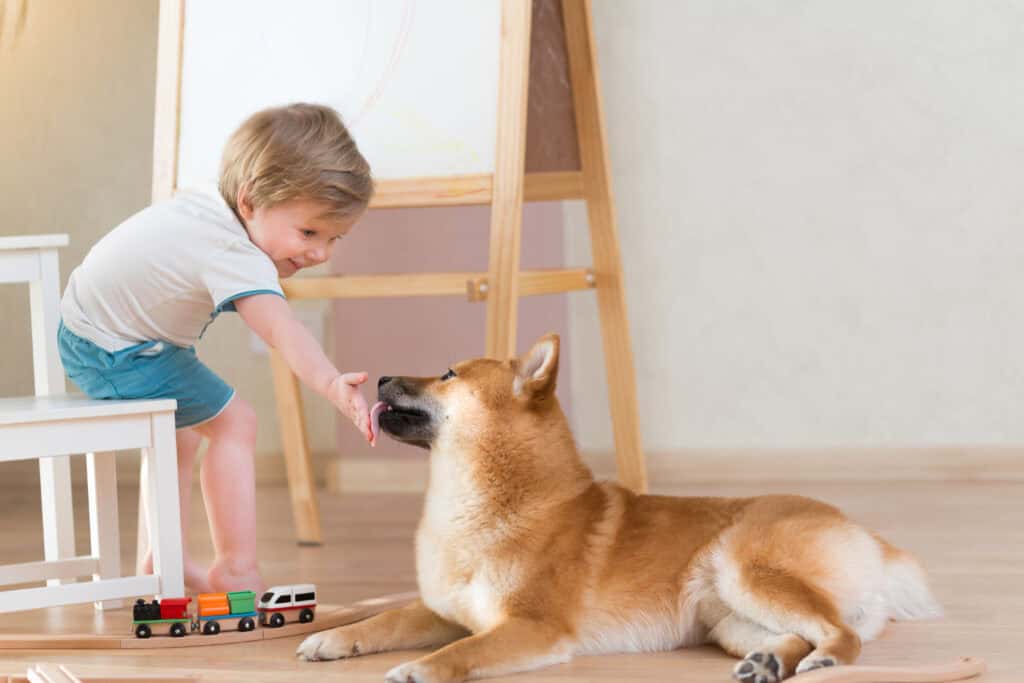
Observing your dog’s body language and any obvious stress signals can help you to spot any danger signs before they manifest into a nip or bite. For example, lip licking, yawning, avoidance, freezing and growling are all ways that your dog communicates before feeling the need to escalate. While some dog owners may feel compelled to punish behaviors like growling, this is actually how your dog is communicating their displeasure with the situation.
High-risk situations
Be conscious of any situations where the risk level could increase – this usually involves scenarios where the dog feels cornered or threatened, or where the dog has a valuable resource (such as food or toys). Remember that your dog may even consider space a resource, especially when they use it to feel safe, so do not allow your children to climb inside the dog’s crate or to crawl on their bed. Watch for any situations where your dog could become overstimulated. If you have friends or family visit your home with kids in tow, brief them in advance of the ground rules and reaffirm those during their visit. If at any point your dog begins appearing overstimulated, stressed, or is proactively attempting to retreat away from the commotion, don’t feel bad about separating your dog completely. Sometimes they need a break too!
Supervision vs. management
Mixing dogs and kids is a situation where simply supervising the interactions may not be enough. Even with the best of intentions, it is simply not feasible to leave young kids and dogs to interact for 10-12 hours a day and not run the risk of a dangerous situation.
Proactive management is therefore a necessity. Crates and safe zones are a good option for your dog, but use them sparingly – you don’t want to create a negative association and your dog shouldn’t have to live the majority of their life cooped up in their crate. Rather than restricting your dog, consider using playpens and baby gates in your home to provide freedom for both your child and your dog – while keeping them both safe.
When to seek professional help
Couples expecting their first child often wonder if they should seek professional training for their dog to help cope with the new arrival. There isn’t a one-size-fits-all answer here – some dogs are naturally more resilient and adapt well to the change in circumstances, while others will struggle to cope with a new baby. Similarly, parents of toddlers who bring a new dog into their home may consider training to help integrate the pup into the family.
As a general rule, you may need to seek professional guidance if:
- You are an inexperienced dog owner or lack confidence in your dog’s behavior around children
- Your dog is displaying obvious stress signals or appears uncomfortable around children
- Your dog is growling or snapping around your children
- You are feeling overwhelmed by the interactions between your child and dog
Sometimes these situations can be resolved quickly by tweaking your dog’s environment or interactions; here at Synapse Canine, we offer one-off virtual consulting sessions where you can get support and advice on how to optimize the relationship between your dog and your children. Contact us today to find out how we can help!