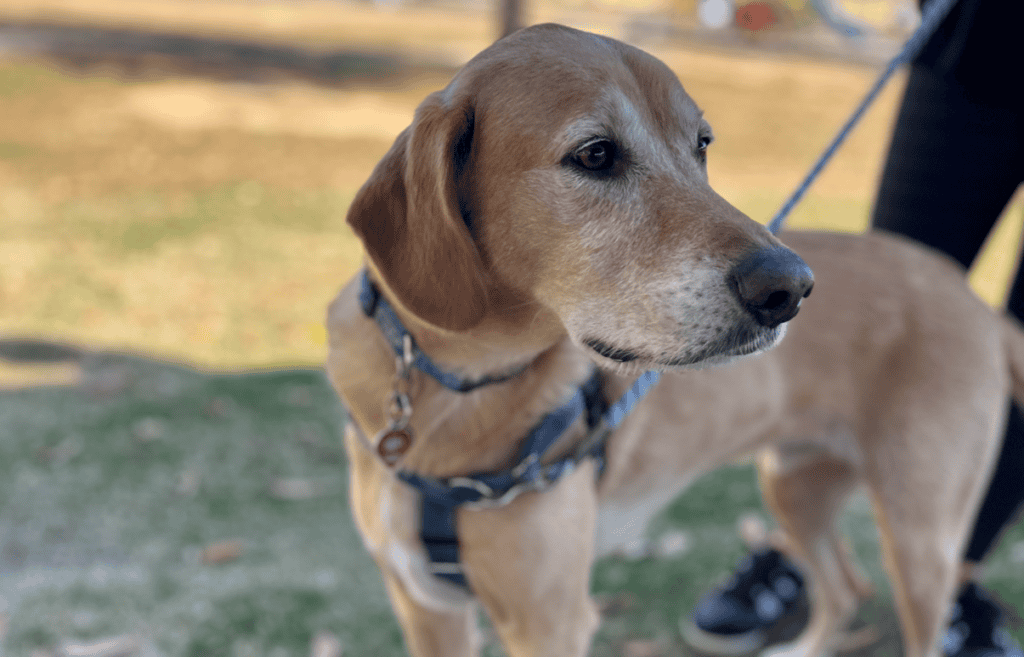
There is no shortage to the variety of tasks that dogs can excel at. It seems that not a week passes by without a news story highlighting the incredible work that dogs can do – from valuable search and rescue work to help locate missing people, to performing life-changing tasks as service dogs, and much, much more.
Research has shown that dogs are not only capable of being trained successfully in these disciplines – in fact, even just their mere presence can provide multiple benefits for humans. Dogs provide physical, mental and emotional health benefits as calm companions, encouraging us to be more active, lowering our blood pressure, and helping with symptoms of depression and loneliness. Cortisol (the stress hormone) is lowered when a human is petting a dog.
As these benefits become more well-known by the wider public, it is no surprise that utilizing canines as therapy dogs has become a popular option in settings such as nursing homes, hospitals and schools. Counselors and therapists can also use therapy dogs as a tool to bring comfort to their clients during sessions. This is where therapy dog training comes to the fore.
In the past year, we have seen a marked increase in interest in our therapy dog training program, so in this article, we’ll outline what a therapy dog is (and isn’t); if your dog could be a good therapy dog candidate; and how the training process actually works.
What is a therapy dog?
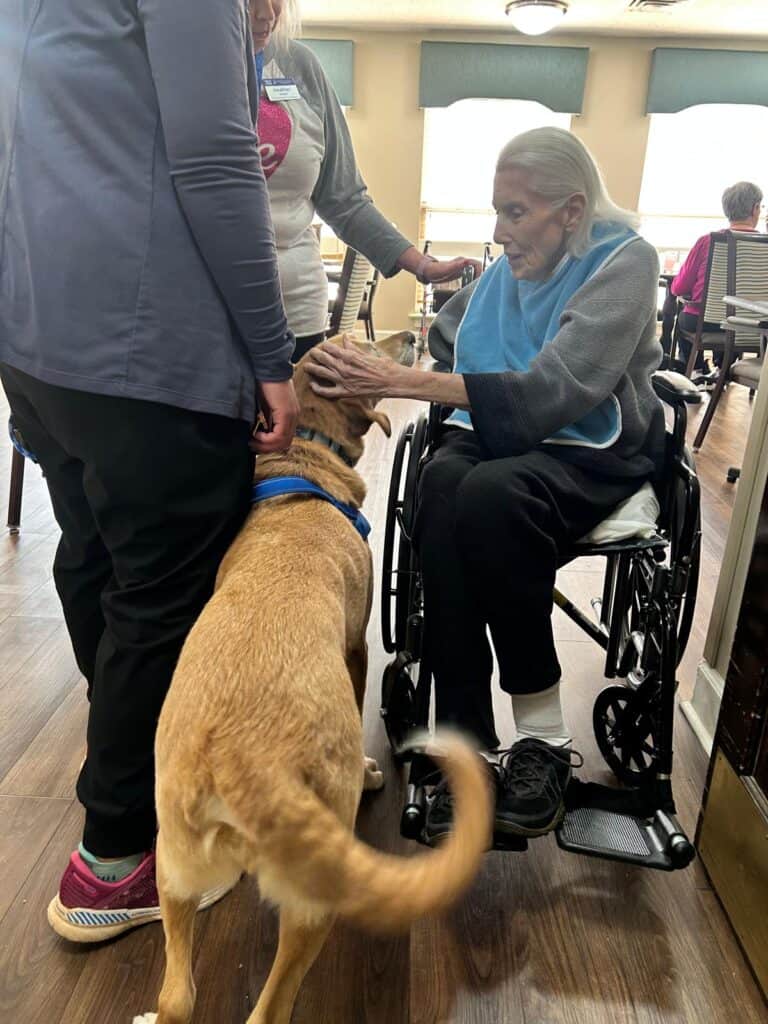
A therapy dog is a well-mannered, calm dog that provides comfort and emotional support to individuals or groups, typically in structured public settings. A therapy dog does not have to be a specific breed or size. They are handled by volunteers (often their owner) who are in control of the dog when it is interacting with people. Typically, a therapy dog will be used for petting by members of the group, although their mere presence can often have a calming effect too.
Therapy dogs can be utilized in hospitals, schools, libraries, assisted living facilities, crisis centers, or any environment where their presence can be beneficial. Unlike service dogs, therapy dogs are not trained to perform specific tasks for one person; they work with many people. They also do not have the same public access rights as service dogs are afforded under the Americans with Disabilities Act (ADA).
What therapy dogs are not
It is important to draw a distinction between what a therapy dog is and what it is not. Knowing the differences is not only vital for understanding the role of a therapy dog, but also helps to preserve the necessary protections for service dogs and their handlers.
A therapy dog is not:
- A service dog
- An emotional support animal (ESA)
- A dog that has been trained to perform specific tasks for an individual handler
- Classified as medical equipment
- Eligible to enter restricted public places that are not welcoming or suitable for dogs (unlike service dogs)
Service dogs and ESAs (which also have their own differences) provide support and assistance to individuals; a therapy dog provides more general help for bigger groups.
Could your dog be a therapy dog?
Many pet dog owners have asked us if their dog could be a therapy dog. The reality is that a lot of pet dogs can be trained for therapy dog work, but the determining factors are often temperament, disposition and obedience. It is essential that a therapy dog feels calm and comfortable around unfamiliar people and environments.
When thinking about embarking on therapy dog training, you should consider the following questions:
- Does your dog enjoy interaction with strangers?
- Is your dog comfortable with unpredictable movements and noises?
- How does your dog handle, and respond to, stressful situations?
- Is your dog calm and neutral in new environments?
- Does your dog have a solid foundation of obedience?
Oftentimes, owners may not know the answers to all of these questions. This is why, at Synapse Canine, we usually recommend therapy dog evaluations before owners commit to a full training program. This way, we can assess if the fundamentals are in place for your dog to succeed as a therapy dog.
Foundations of therapy dog training
There are some core skills that your dog will require to be an effective therapy dog. They will need basic obedience (sit, down, loose leash walking). In addition, you’ll also want to ensure they are able to station comfortably for petting, and that they exhibit polite behavior when meeting strangers. The Canine Good Citizen (CGC) award is often an excellent precursor to therapy dog training as it can build these fundamental skills that will offer you greater control of your pup.
With therapy dog training, the main goal is consistency and predictability. The foundations of obedience and control are important, of course – but what you really need is confidence in your dog’s ability in a number of different environments. Intentional socialization and generalization of your dog’s behavior will help to set you and your dog up for success. It is also essential to be able to advocate for your dog; while your dog is providing a valuable service, you do not want to put them in a situation that could unduly overwhelm or stress them. Recognizing those stress signals in your dog can keep the experience positive for everyone.
How our therapy dog training programs work
As we mentioned above, we typically like to conduct an evaluation before moving forward with a therapy dog training program. This allows us to observe your dog’s temperament and skills, and also provides you with an opportunity to learn more about the nuances of therapy dog work and ask questions about our program.
Once the training program begins, we will work systematically on building your dog’s skills for therapy dog work. This may include reinforcing and enhancing your dog’s level of obedience, in addition to stationing exercises to prepare them for petting. We will also provide you with extensive guidance on body language signals that could indicate if your dog is becoming stressed or uncomfortable, so that you are fully prepared for the world of therapy dog work.
As our program progresses, we will gradually expose you and your dog to different environments. This will usually begin with a ‘staged’ group setting whereby we will walk you, step-by-step, through a typical therapy dog interaction. This allows you to practice in a controlled setting and not only builds your dog’s confidence, but also gives you peace of mind prior to real world training exercises.
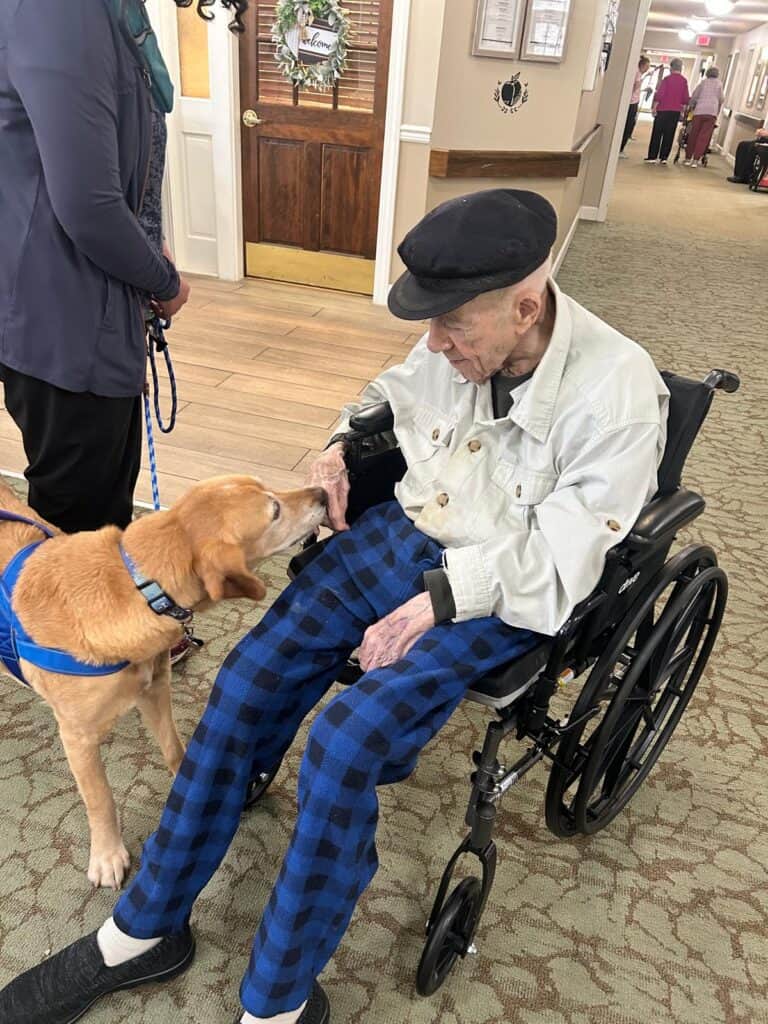
Towards the end of the therapy dog training program, we will arrange for visits to libraries, nursing homes, schools, or other facilities. The exact location of these visits will depend on where you intend to work with your therapy dog. We will accompany you on these visits to help you and your dog, and provide you with tips and guidance to get the most out of your interactions. These enable you to put into practice what you have learned in the program, and prepare you for work as a therapy dog team at its conclusion. While we do not provide our own certification for therapy dogs, we can also point you in the direction of certifying authorities if desired.
Therapy dog work can be very rewarding! It is a great opportunity to give back to communities and groups who can truly benefit from interacting with a well-trained therapy dog. If you’re interested in our therapy dog training program, simply fill out the form below or reach out to us at info@synapsecanine.com for more information.